
M20B27 Stroker Build
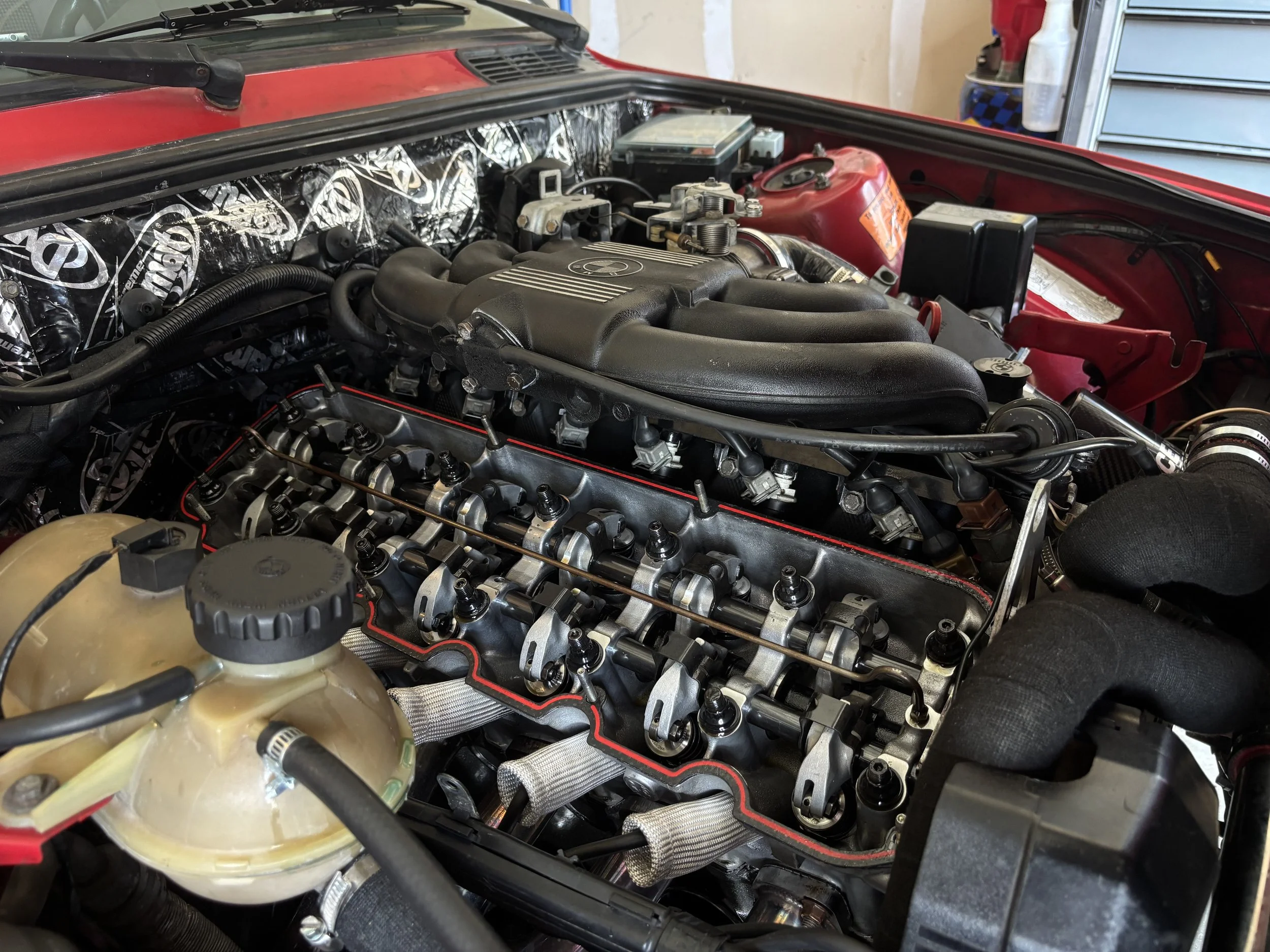
The OEM+ recipe, 81mm ETA crank, 1988 short skirt pistons, and a ported 885 head to build the naturally aspirated M20 BMW should have shipped from the factory.
The OEM+ Philosophy
The BMW M20 is the charismatic heart of the E30 chassis. It's a SOHC six cylinder with beautiful acoustics, a classic inline architecture, and enough inherent potential to embarrass far more modern engines when developed correctly. But in stock form, especially in the anemic Eta variant, it leaves you wanting more displacement, more compression, and more urgency.
The goal for this build was never a modern engine swap. That's the easy path. The goal was to build the version of the M20 that BMW should have shipped from the factory: 2.7 liters of displacement, high compression suited for naturally aspirated use, and a free flowing top end that lets the engine breathe all the way to the rev limiter.
This isn't about chasing modern supercar numbers. It's about perfecting the torque curve, preserving the period correct look and sound of a vintage BMW while providing the athletic power delivery the E30 chassis always deserved.
The M20B27 recipe is well established in the E30 community, but the execution matters. Every component choice from the crank to the valvetrain hardware, was made to maximize reliability at high RPM, not just peak dyno figures.
The Rotating Assembly
Displacement Strategy
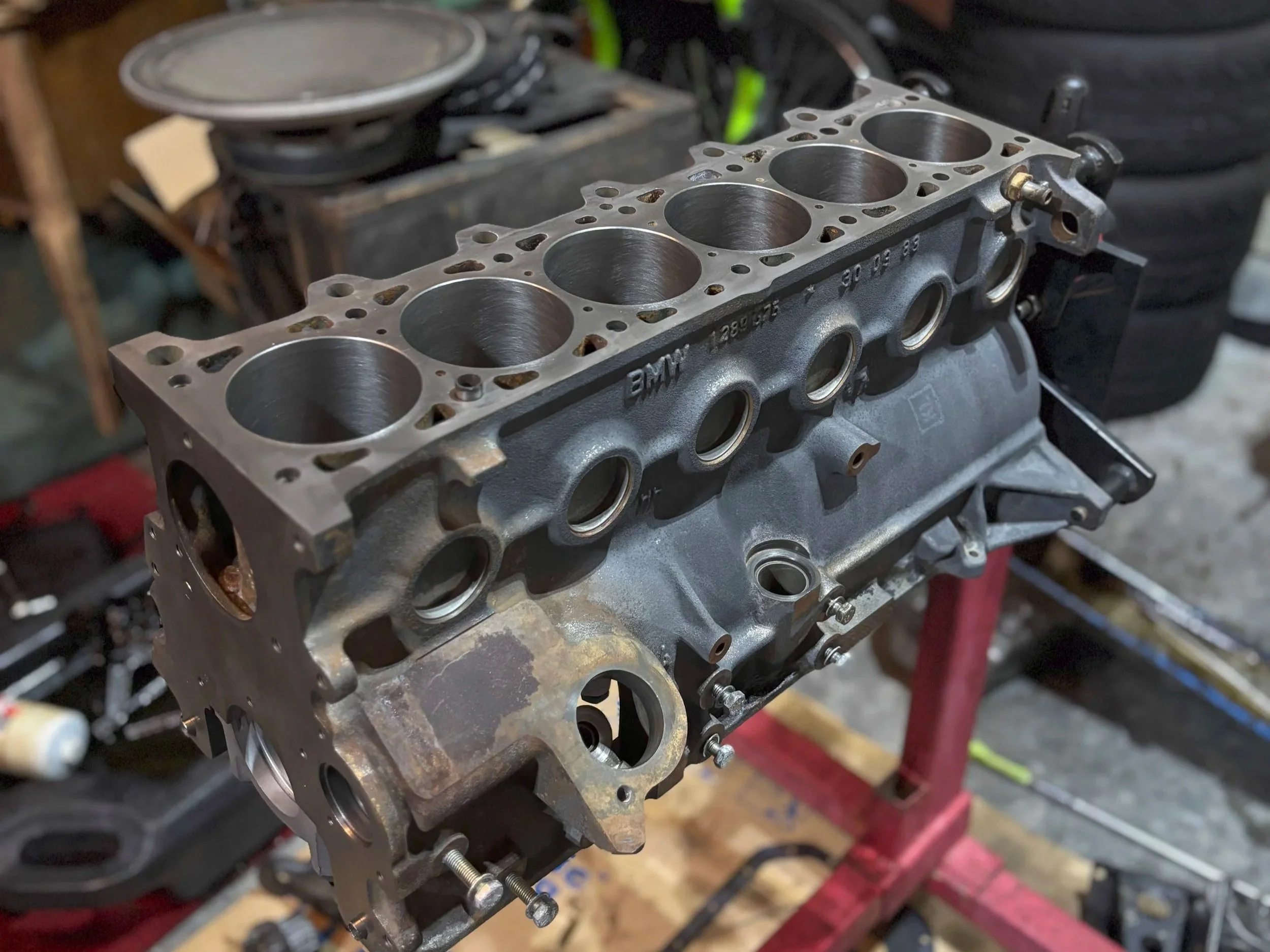
Reaching 2.7 liters in the M20 requires a simple but hard to source combination: the 81mm forged crankshaft from either the M20B27 ETA or the M21 diesel, paired with pistons that correct for the change in stroke geometry. The ETA crank increases stroke over the standard M20B25's 75mm unit, but it introduces a deck height problem that determines what pistons you can run.
The 81mm ETA crank can be sourced from the M20B27 ETA engine (1983–1988) or the M21D24 diesel. Both share the same stroke. Match the crank to forged 135mm "i-series" connecting rods for correct deck height geometry.
The Piston Hunt
If you've spent any time researching M20 stroker builds, you know the piston problem intimately. The 1988-only "Super ETA" short skirt pistons are notoriously the hardest part of the puzzle to source. Most early Eta engines used heavy, long skirt pistons with flat tops, yielding a static compression ratio of 8.5:1, suitable for boost applications but far too sluggish for a high strung naturally aspirated build targeting 9.7:1 or higher.
The 1988 pistons feature a unique dome profile that, when combined with the 135mm "i" connecting rods, achieves a compression ratio between 9.7:1 and 10.0:1 depending on head gasket thickness selection. This is the sweet spot for pump-premium naturally aspirated use with the 885 head.
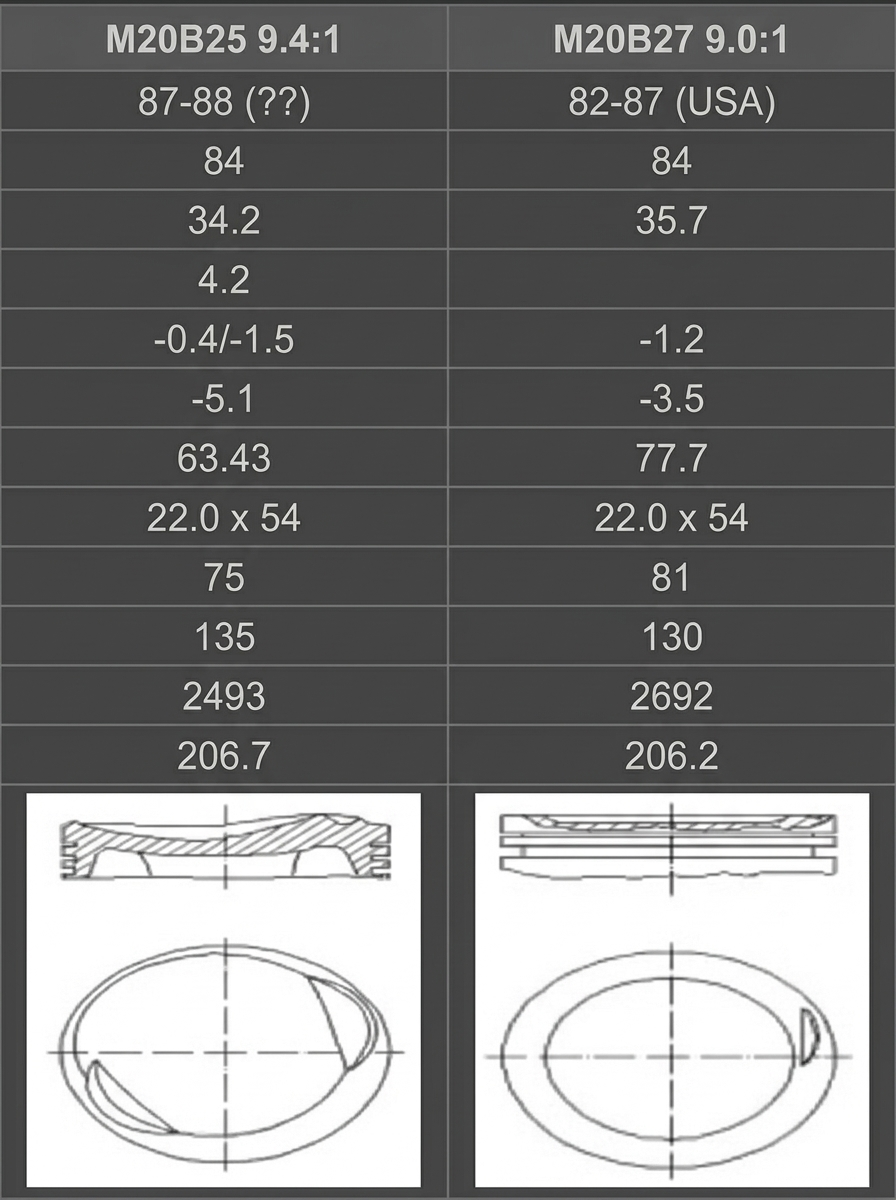
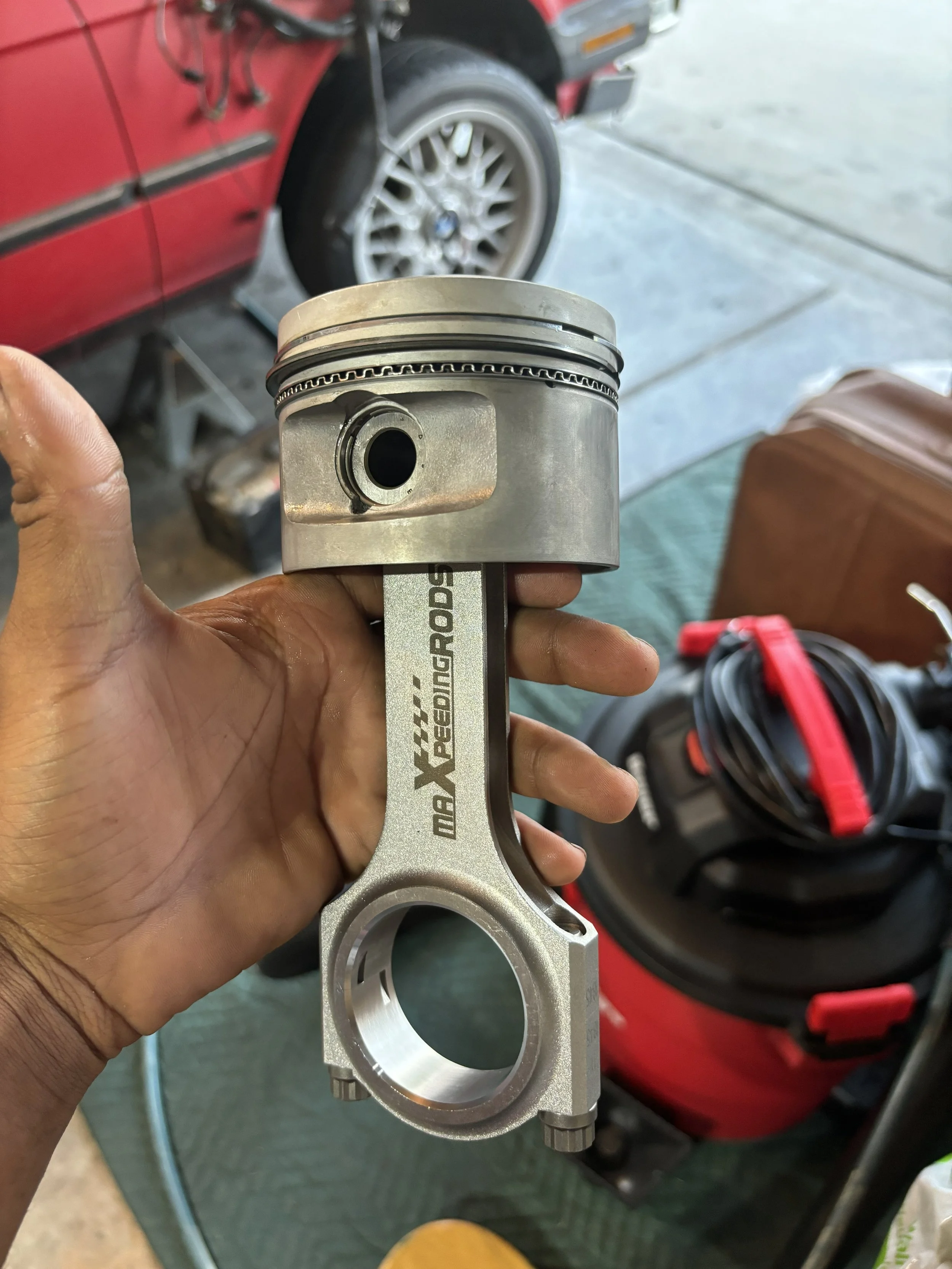
I spent months scouring forums, dead end Craigslist leads, and the usual parts vendors. The breakthrough came from scrolling through a BMW E30 Facebook group at exactly the right moment. A set appeared, I didn't negotiate. I just moved. Scoring those pistons turned the build from a theoretical project into a confirmed high compression reality.
Stock vs. Stroker — Rotating Assembly
Headwork & Valvetrain
An engine is fundamentally an air pump. Increasing displacement to 2.7 liters means the cylinder head must be capable of moving a larger charge volume at high RPM, otherwise the top end becomes the bottleneck that chokes off the power the rotating assembly is capable of producing.
The 885-Casting Head
The foundation of the top end build is the 885-casting head, sourced from a 325i. The early Eta engines used the 200-casting head with smaller valves and tighter intake ports, not ideal for a flow focused build. The 885 head ships with 42mm intake valves and 36mm exhaust valves, plus larger intake ports that respond well to porting work.
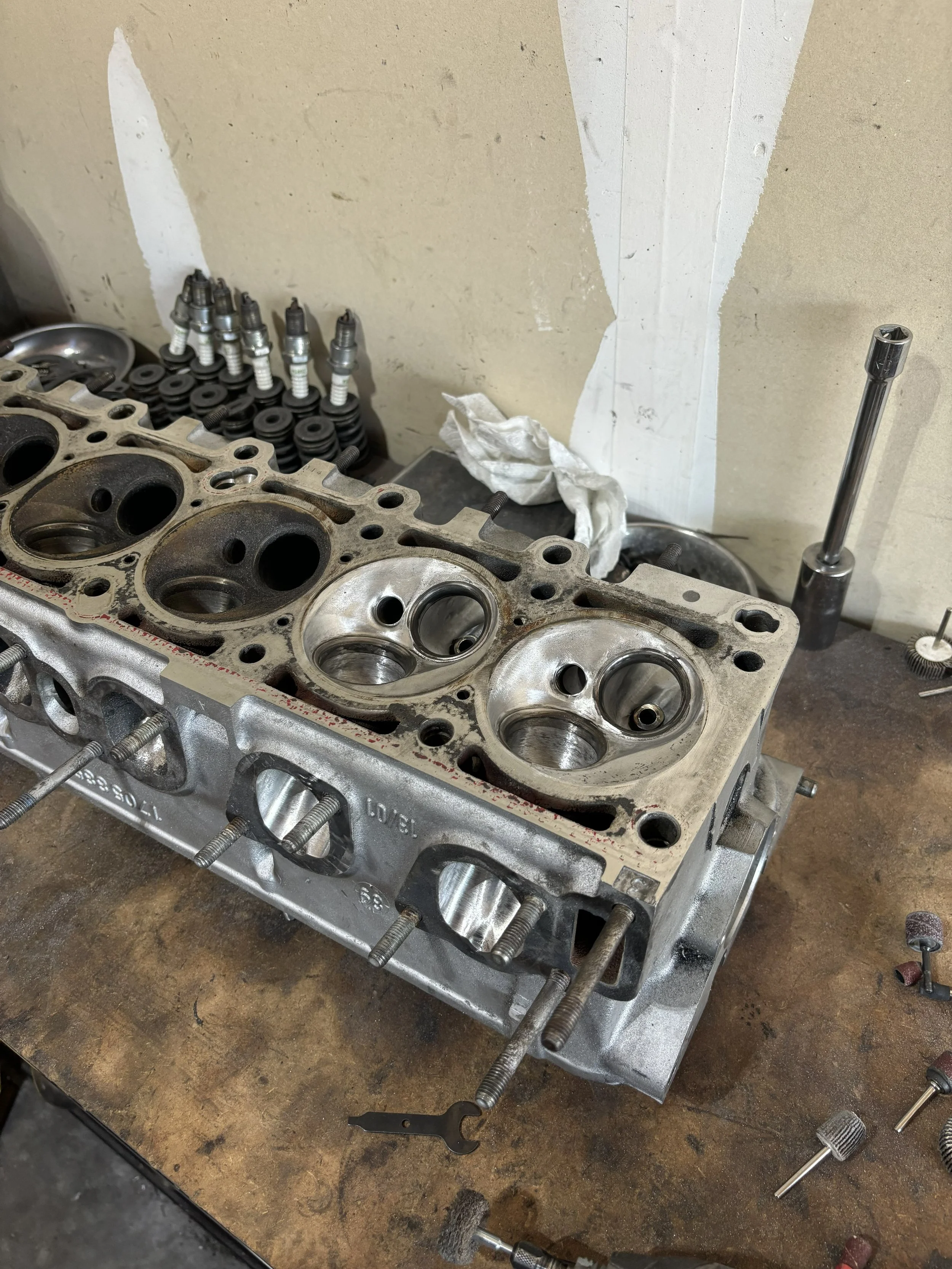
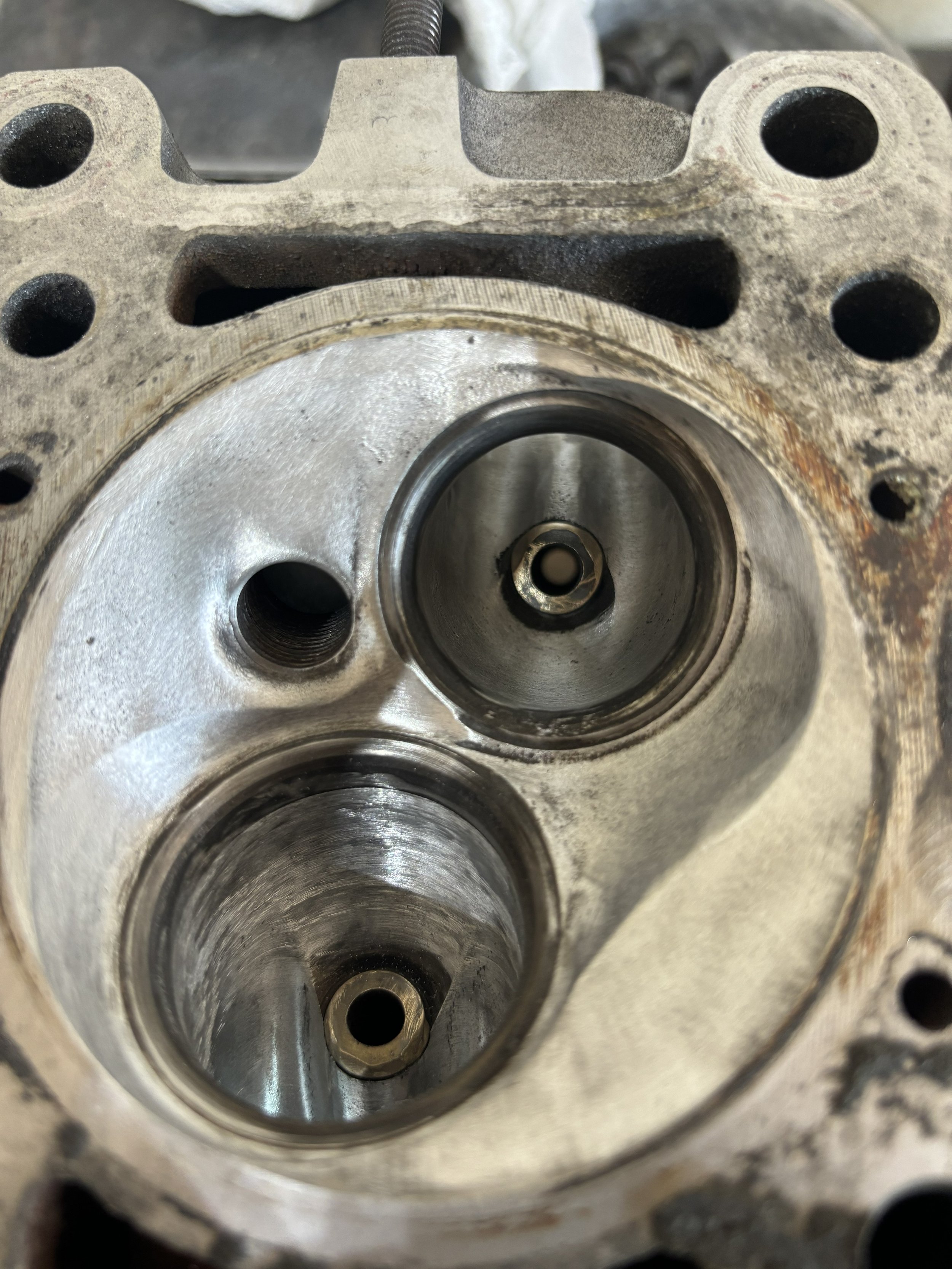
A heavy port and polish was performed to smooth out the factory casting marks left inside the intake and exhaust ports. This isn't a radical race spec head, the approach was to remove obstructions and create a consistent cross section through the port, improving flow velocity without over sizing the port to the point of killing low end torque. Valve seats were also cut to a multi angle profile to complement the dome shape of the 1988 pistons.
Camshaft Selection
The camshaft drives the character of the engine as much as any other component. For this build, the Ireland Engineering 272 Cam was selected, a proven street/track grind that adds duration and lift over stock while maintaining streetable idle quality and vacuum for power brakes.
The IE 272 cam provides an aggressive top end pull without sacrificing the usable low end torque that makes the stroker kit worthwhile on the street. It pairs naturally with the larger displacement to extend the powerband well past 6,000 RPM.
Valvetrain Hardware
Running the 272 cam with decades old stock valve springs was never part of the plan. High lift cams accelerate valve float, at high RPM, a weak spring can't force the valve back onto the seat fast enough, causing power loss and, in worst cases, catastrophic valve-to-piston contact.
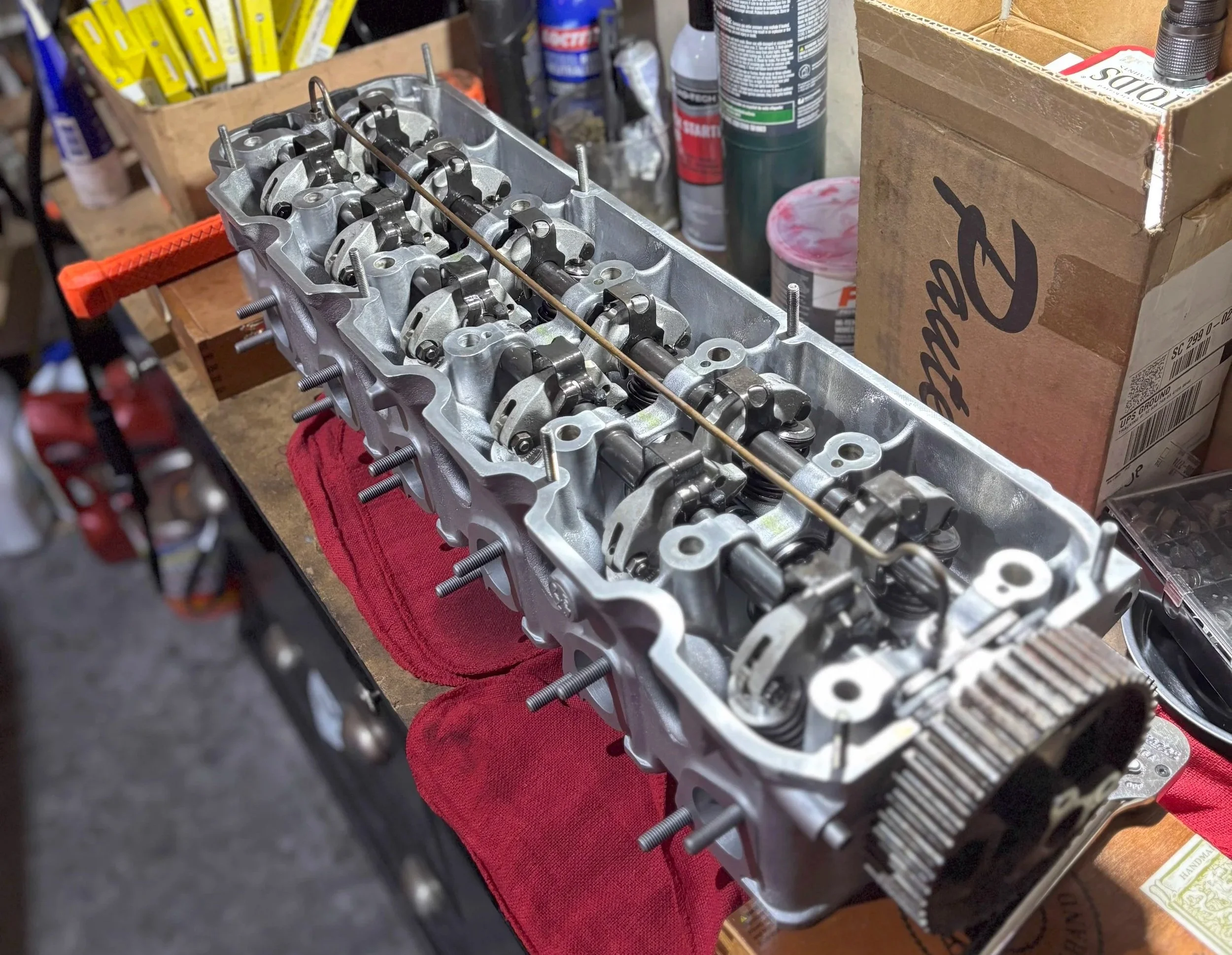
The solution: Schrick valve springs for the correct seat pressure and open pressure with the IE cam, combined with VAC Motorsports Titanium retainers. The titanium hardware reduces reciprocating mass at the top of the valve stem, lighter retainers mean the spring has an easier job keeping the valve controlled through its entire lift cycle. This provides a crisper throttle response and reliable operation well past 6,500 RPM.
Complete Build Component Summary
Forged crankshaft sourced from the M20B27 ETA or M21D24 diesel. Increases stroke from 75mm to 81mm, delivering the additional displacement that defines the stroker build.
"Super ETA" pistons with unique dome profile. Only produced in 1988. Enables 9.7–10.0:1 CR with the 135mm "i" rod, the rarest and most critical component in the build.
Longer rod length from the M20 "i-series" engines corrects the deck height when the 81mm crank is paired with short skirt pistons. Required for proper piston-to-deck geometry.
From the 325i. Features 42mm intake / 36mm exhaust valves and larger port volume versus the 200-casting ETA head. Ported and polished to remove casting marks and optimize flow velocity.
Street/track camshaft that extends the powerband while retaining streetable low end pull. Paired specifically with the 885 head and stroker displacement to maximize NA output.
Correct spring rate for the IE 272 cam profile. Titanium retainers reduce reciprocating mass, preventing valve float at high RPM and providing sharper throttle response throughout the rev range.
Why Each Decision Was Made
Conclusion
The M20B27 stroker build represents a disciplined OEM+ approach to extracting maximum potential from the E30's original drivetrain architecture. Each component selection, the 81mm ETA crank, 1988 short skirt pistons, 135mm "i" connecting rods, 885-casting head, Ireland Engineering 272 cam, and titanium valvetrain hardware, was made to address a specific constraint in the stock engine's character.
The result is an engine that retains everything that made the M20 iconic, its inline six acoustics, its period correct architecture, its physical presence in the engine bay, while eliminating the flat, uninspired power delivery that defined the original Eta specification. It pulls hard from 3,000 RPM and doesn't fall off the cliff at 5,000 RPM.
This is the engine the E30 chassis was always meant to have.
